Ron
Ron 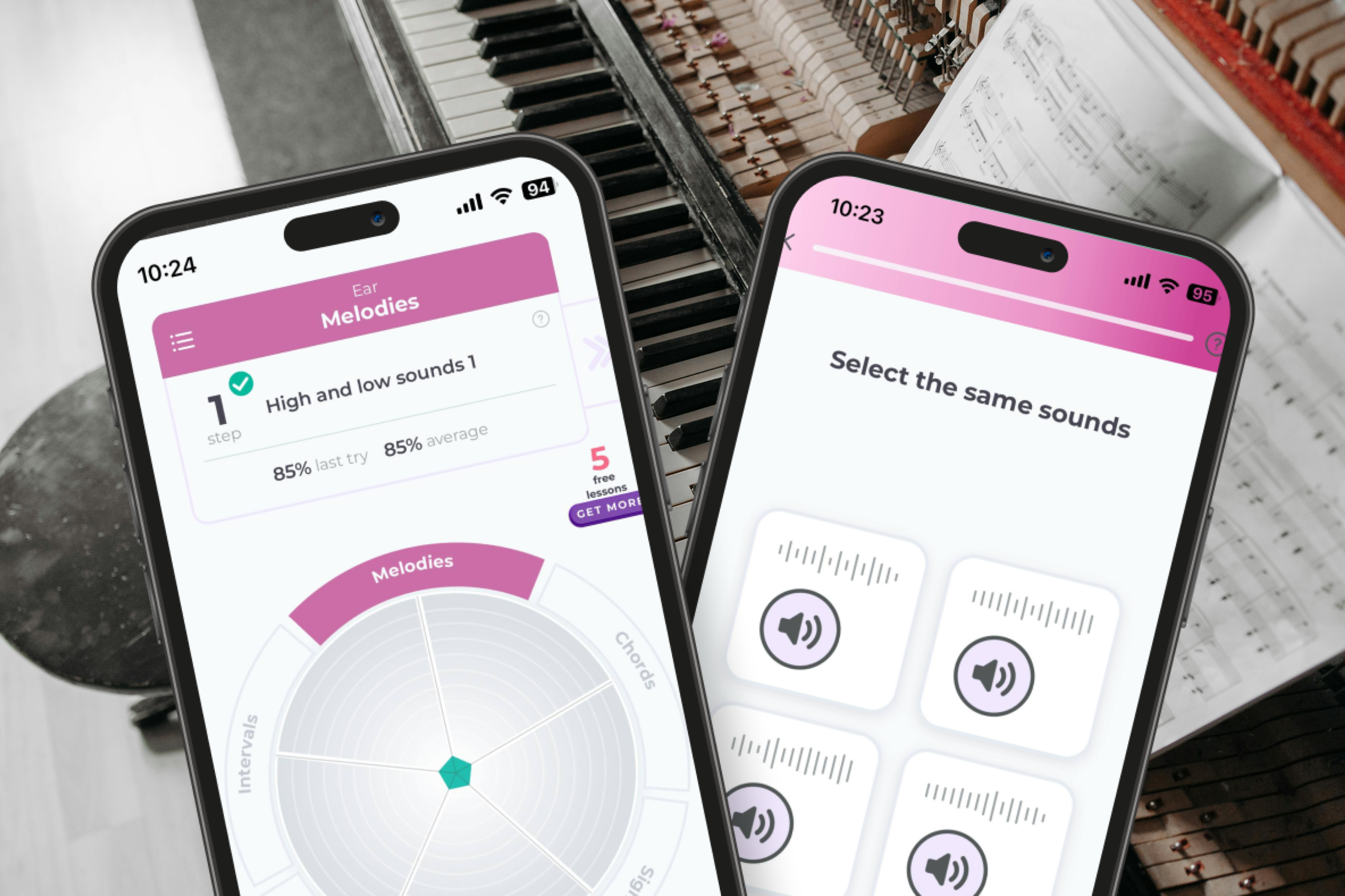
Why choosing the right app is important for piano learning beginners
Sometimes, it could be thought that a beginning musician just needs to find any app and commit immediately to the process of learning. However, a good start is key to success. Why? It’s because motivation to continue classes depends on first impressions and convenience in the interface. Just imagine: you have downloaded one of the piano apps with a confusing interface, complicated explanations, and boring lessons—your desire to return to the instrument will quickly fade. That’s why choosing a well-designed platform like Talented makes a big difference. When doing an app comparison, it’s worth paying attention to feedback depth and learning paths—the best apps offer personalized guidance, engaging lessons, and a clear structure that keeps learners inspired from the very first session.
Choosing wisely also means thinking like an app evaluation: a clear feature breakdown, checking user reviews, and anticipating learning outcomes.
The choice of an app is not just a question of functionality; it needs to inspire, create a sense of progress, and give confidence that each session brings you closer to your goal. We have confirmed this when creating a product that considers different musical perception styles and learning speeds. This is where a piano learning app with strong feedback quality and thoughtful learning paths really matters.
Main reasons why approaching the choice responsibly is important
Individual approach: People learn in different ways; some by following simple instructions and others by interaction.
- Smooth Immersion: The beginner should not be overwhelmed but understand the basics.
- Motivation: The good app stimulates constantly returning to practice, not having lost interest after the first lessons.
By focusing on these aspects, the likelihood increases significantly that learning will actually become engaging and effective. Use a light decision framework with usability metrics, interface comparison, and beginner requirements to assess fit.
piano apps; Talented; app comparison; feedback depth; learning paths
Evaluation criteria of the application
In choosing a piano learning app, it is important to think comprehensively, not to evaluate only the interface or lesson set. That would be far from enough. Below, some key criteria are presented that help separate truly useful products from superficial ones. Add pricing analysis, app reputation, and tool selection to your checklist for a complete picture.
Criteria table
| Criteria | Description | Evaluation questions |
| Functionality | What the program is capable of: lessons, exercises, settings for various levels | Are there many types of lessons? Is lesson variety strong? Can you customize? |
| Convenience | Interface intuitiveness, ease of navigation | Does the user easily understand what to do next? Is switching between sections comfortable? |
| Motivation | Reward systems, progress, gamification | Is there a function of tracking achievements? Does the app support regular interest to practice? |
The app could be assessed on each point, using a scale such as:
- 1 – unsatisfactory
- 2 – average – 3 – good – 4 – very good 5 – excellent
For example, if the interface causes questions and difficulties, then convenience will be rated as 2. If the lesson set includes videos, interactive tasks, and an adaptive program, then functionality is likely to be rated 4 or 5. It is worth noting that motivation can often be a deciding factor in successful learning. Without proper support and feedback, a beginner quickly loses the desire to practice. Therefore, developers pay particular attention to stimulating elements for the user. In the end, one has to be really careful when comparing all three criteria—functionality, convenience, and motivation—in selecting a tool for a musical start; only in their balance lies the optimum option.
piano apps; Talented; app comparison; feedback depth; learning paths
Overview of main learning formats
Material delivery format plays a major role in choosing piano learning apps. Each of the several main formats that modern applications offer is effective in its own way and helpful for various types of learners, so we shall discuss each one in detail.
Interactive lessons
Although this format resembles traditional teacher-led training, all stages happen in the digital space.
Video lessons, sheet music analysis, and feedback from the app can frequently be found in interactive lessons.
Exercises are done individually, and one’s progress is tracked, with hints given.
Such an approach allows for the step-by-step mastering of basic skills, and the structure of the material allows for better retention.
Educational games
Game elements make learning much easier and more interesting.
Mini-games, competitive modes, and quests encourage consistent practice.
The “catch the right note” or “play along with the melody” kinds of mechanics common in many games develop hearing and finger coordination.
This format is great for young learners or for those who prefer entertainment while learning.
Simulators and exercises
Focused on the practice of techniques offered by such modules, with many repetitions.
Clear instructions, metronome, and slow mode facilitate gradual improvement of speed and accuracy in playing.
Simulators are useful for reinforcing material that has already been learned and developing motor skills.
Important when choosing an app is to consider which format suits you personally and how you plan to practice: intensively and for long or short regular sessions with game elements.
How the Talented app helps in mastering basic skills quickly
The Talented app is unique because it combines the advantages of all the previously mentioned formats in one interface, which makes piano learning maximally effective and comfortable. Below is how the app speeds up the mastery of basic skills.
- Personalized learning plan. Talented analyzes which skills you already possess and then suggests an adaptive route from simple exercises to more complex ones. Hence, overload is avoided, and as you progress, knowledge consolidates.
- Real-time interactive feedback. The app recognizes if you play correctly and immediately corrects mistakes. This instant feedback reduces considerably the time spent correcting habits and perfects the technique.
- Game elements integrated into lessons. Besides that, Talented provides game tasks for lessons: for example, “earn points for accuracy” or “complete mini-quiz on music theory.” All this helps keep interest in lessons from the very start.
- Extensive library of exercises and melodies. From classics to popular modern songs, vast repertoire choice allows not only learning but also enjoying playing, which is very important for beginners.
- Progress visualization. Visual graphs and achievements incite continuing lessons and provide clear understanding of which results have already been achieved and what requires attention.
In such a way, Talented turns what is rather a complex process of learning to play piano into an approachable and encouraging pathway and removes many traditional obstacles which get in the way of confidently continuing for beginners. Include feature prioritization and tutorial comparison when judging these strengths.
Installation and first launch tips
Easier than it seems, starting your journey with Talented is.
To avoid confusion in the initial steps, and to dive straight into learning, here’s a simple guide:
- Download and install the app.
Talented is available on the main platforms: iOS and Android. To make it run smoothly, your device should be updated to support the latest version of its operating system. - Create a profile.
First, create an account after opening the application. This will give you the ability to save your progress and share data between devices. - Choose your starting level.
In Talented, you can select your current skill level: beginner, intermediate, or advanced. Do not be afraid to pick “beginner” — lessons will be adapted correspondingly. - Take the introductory test.
You will be invited to a short interactive test, after which the app will be able to adjust the lesson program according to your needs and learning pace. - Get familiar with the interface.
Spend some time learning the sections of the menu, the lesson-time blocks, and modes — where things are, and what’s available to you. - Schedule your lessons.
You can develop a habit of regular study by using the in-built calendar with reminders in Talented.
Do not hurry with difficult exercises — it is better to repeat basic lessons several times in order to build a strong foundation.
Conveniently enough, Talented structures the whole program to introduce new knowledge and skills smoothly without overloading them.
Integration with a real instrument
One of Talented’s key features is the unique ability to combine virtual lessons with playing on a real piano. This explains the importance of and how to use this approach most effectively:
- Physical contact with the instrument. While the app offers a virtual keyboard to begin with, true practice on a physical instrument consolidates your skills and develops your sensitivity and muscle memory.
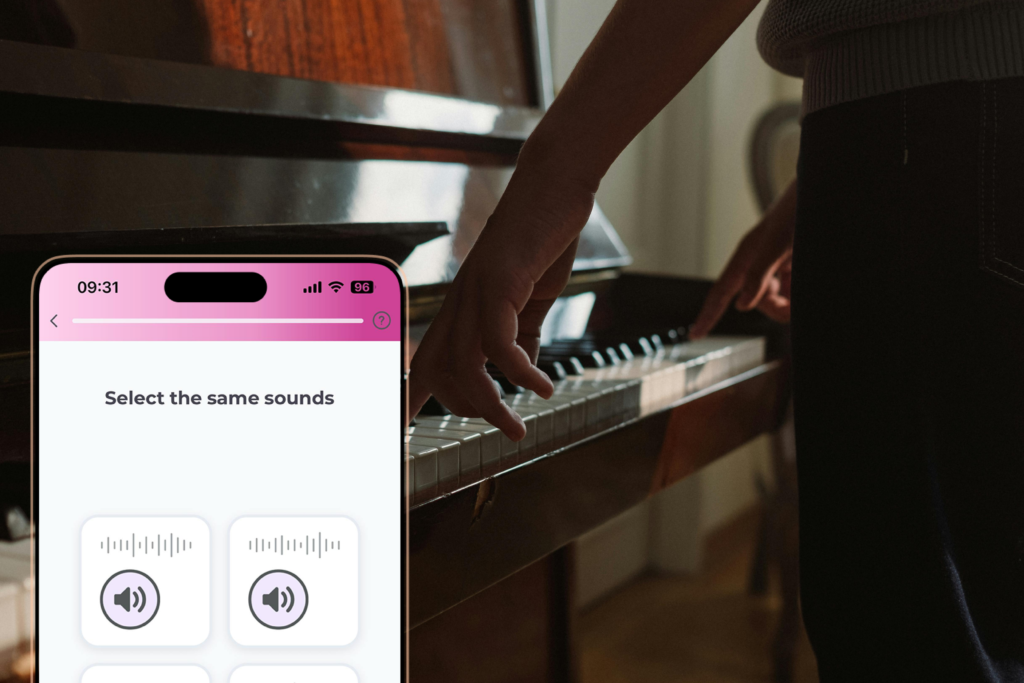
- Overlay of digital hints. On a real piano, Talented allows a “live learning” mode: the app recognizes notes and mistakes in real time, providing tips on correct rhythm and articulation.
- Practice and theory in tandem. Switching between educational games and real playing is possible at any moment to gain both technical insight and a deeper feel of the music.
- MIDI and audio input sensitivity settings. Talented connects with MIDI keyboards for the owners of digital pianos, reading each keystroke accurately and building personalized error analysis.
- Offline mode support. If internet access is not constantly available, lessons can be downloaded and used together with the real instrument at any time.
A perfect hybrid system for beginners aiming at not only screen-based learning but all-around development. Combining Talented’s virtual capabilities with physical piano skills eventually provides maximum results in a minimum amount of time.
piano apps; Talented; app comparison; feedback depth; learning paths
Support in progress and analysis of results
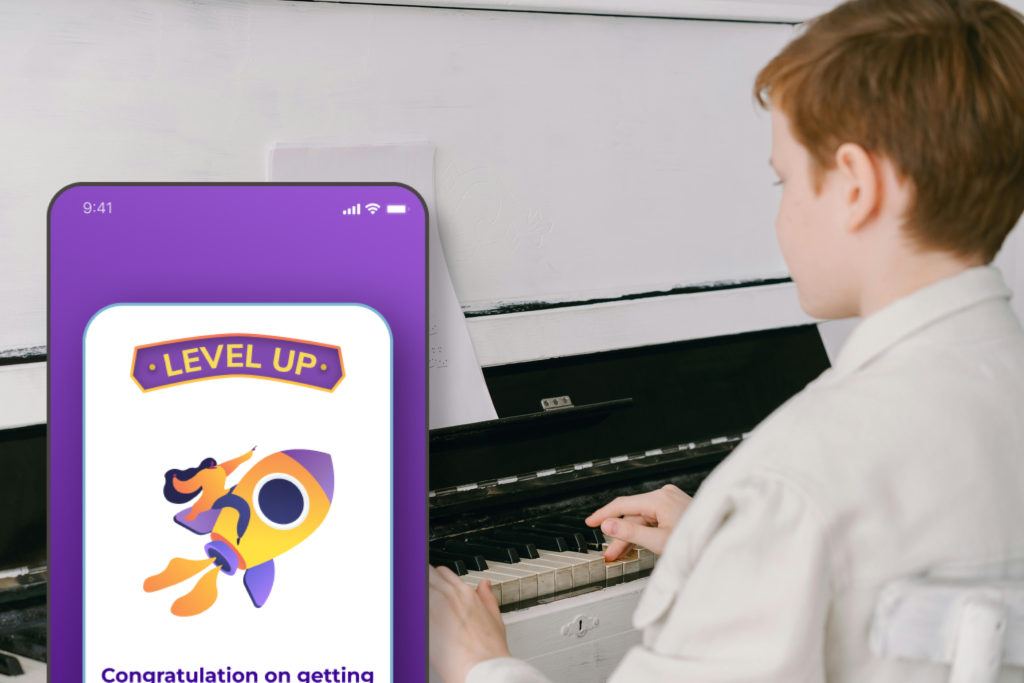
Support in progress and analysis of results is the key so that the path of piano learning does not turn into a routine and will never lose its initial brightness.
Confident in Talented, we are: the motivation should stay in the center of the process and not get dissolved in endless repetitions.
How to do this? See below — several guiding principles we have embodied in the app that will help you keep on track:
- Regular feedback.
Easy it is to lose interest without understanding where you are now and how you advance.
Every lesson is recorded; results after sessions become available right away, showing what you did well and where repetition is still needed.
Mistake analysis becomes more accessible and clear. - Visualization of progress.
Detailed infographics of your progress that we have designed: levels of difficulty, amount of lessons completed, time of practice, and goals reached.
A tracker like this makes things visual and gives a feeling of real growth, urging one to move forward. - Achievements and rewards.
Small yet important: badges, certificates, bonus levels.
Encouragement is given for every new skill learned. The interest it provokes helps reduce the “going in circles” feeling, and makes learning more playful and interactive. - Personalized recommendations.
The app will suggest what to repeat and what to master next, based on your results. The system adjusts to your pace, which allows you not to waste your time on unnecessary things. - Reminders and practice plans.
Practice should be imbedded in daily life, so not to forget it. Our feature sets a comfortable schedule: not intrusive but effective.
So, what does it mean for you? It is not amateur trials and errors in chaotic order but a structured path where every step is controlled and supported by technology. Analytics here are not just numbers but a map, helping you not stray from the trail on the way to mastery. Motivational support — that’s a game we’re playing together with you. Without it, any knowledge will very soon lose its power. That is why we believe that the key to successful lessons is not only materials and classes but also a smart approach to their analysis and accompaniment. In other words, every note forms part of your success story in the end.
Questions and answers beginners ask while using the Talented app
Almost every question, from the choice of technique to understanding musical notes, regularly appears at the very beginning of learning to play piano. Talented does not let these typical difficulties go unnoticed. Here are some common questions and how this app helps in solving them:
- How to position hands correctly? Talented provides video tutorials with detailed analysis regarding the positioning of your hands. There is also a function that, with the use of the camera, analyzes hand placement to avoid habits standing in the way of playing.
- Where to start — with notes or playing by ear? This app offers the adaptive program, oriented to the user’s level, smoothly combining note reading and ear development.
- How not to lose motivation at the first difficulties? The system has implemented gamification: reaching goals will be rewarded with badges and unlocking new levels. Besides, there is a possibility to connect to a community of learners to share experience.
- What to do in case of technical problems with the application? In Talented, there is a support section where detailed instructions and fast answers to often-asked questions are available at any time.
Thus, the feeling of support is ever-present for the beginner, while barriers become understandable and manageable stages.
How to choose an app for long-term development of musical skills
Not the easiest thing is to choose an application that will become your companion in the musical journey for years ahead. A number of important aspects should be considered for making the right choice:
- Flexibility and scalability of learning.
Therefore, the app should grow with the progression, providing harder exercises and newer styles of music along the way, without keeping a person stuck on one level. - Range of formats.
A combination of interactive lessons, trainers, games, and theory is the key to comprehensive development. Without it, one can easily lose interest or face some kind of lag in knowledge. - Feedback and analysis of progress.
Regular access to your results and detailed error analytics help to adjust the approach and build an individual learning trajectory. - Community and support.
Being able to communicate with other learners and teachers, share experiences, and receive advice will substantially increase the possibility of long-term success if the app allows it. - Integration with a real instrument.
This ability to synchronize virtual learning with practice on a real piano is one main factor of true mastery.
By choosing Talented, you will get not just an app but an extensive tool, taking into consideration all of the above criteria — from the very first steps right up to the professional level. Turning learning into an exciting and productive journey, development, and motivation go hand in hand; this is what this approach does. Balance this choice with interface comparison, pricing analysis, app reputation, and user reviews to complete your app evaluation and tool selection.